How Custom Rubber Molding Enhances Product Durability and Performance
Understanding Custom Rubber Molding Techniques
Overview of Molding Processes
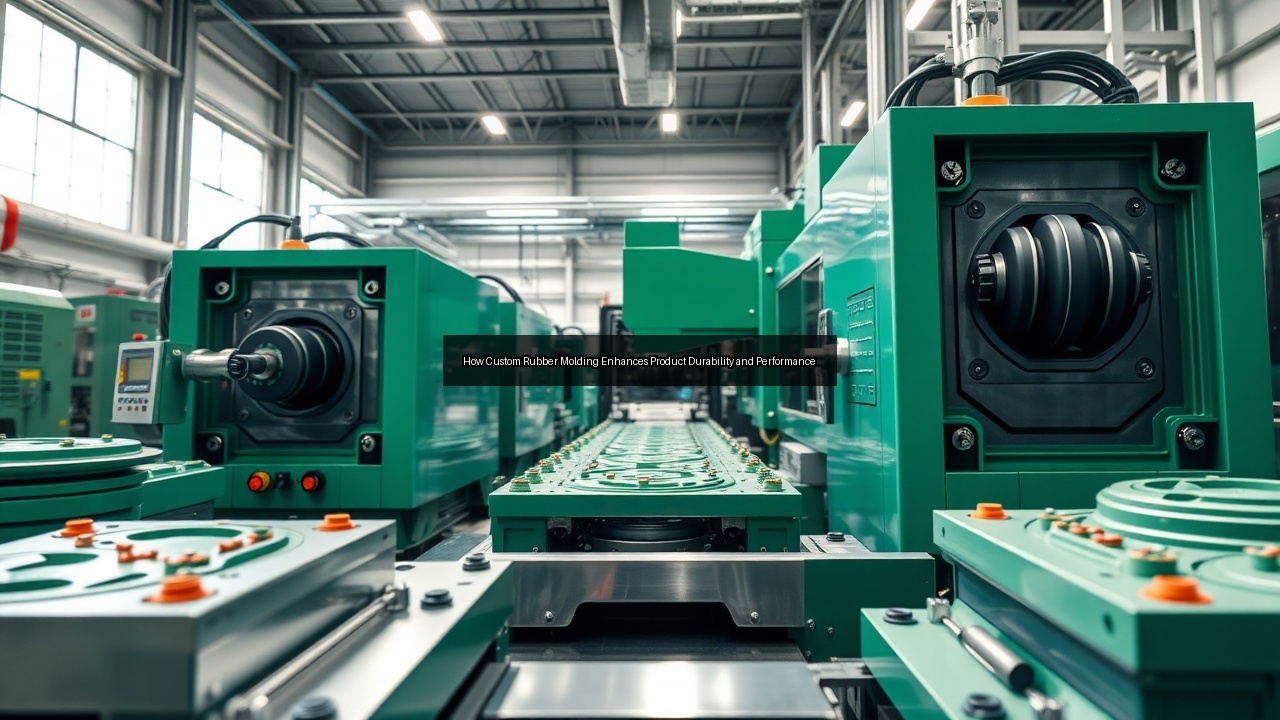
Custom rubber molding delivers precise rubber components that meet exact engineering specifications across industries. Manufacturers select from several core processes to shape raw elastomer materials into functional parts such as gaskets, grommets, bumpers, and bushings. Each method starts with careful compound preparation followed by forming under controlled conditions. The choice of process directly influences final part strength, surface finish, and production efficiency. Custom rubber molding allows engineers to match material properties like elasticity and chemical resistance to specific customer requirements. This flexibility supports everything from high-volume runs to specialized prototypes while maintaining tight tolerances that prevent premature failure in demanding environments.
Injection Molding vs. Compression Molding
Injection molding forces heated rubber compound into a closed mold cavity at high pressure, creating complex geometries with excellent repeatability. This approach suits intricate designs that require consistent wall thickness and minimal flash. Compression molding places a measured rubber preform into an open mold, then applies heat and pressure to fill the cavity. It works well for larger, simpler shapes and often reduces material waste. Engineers compare cycle times, tooling costs, and part tolerances when deciding between these methods. Custom rubber molding experts evaluate production volume and performance needs before recommending one technique over the other, ensuring the selected process enhances overall product longevity.
Transfer Molding: A Unique Approach
Transfer molding combines elements of both injection and compression techniques by moving rubber through a sprue into the mold cavity under pressure. This method excels at encapsulating inserts or producing parts with delicate features that compression alone cannot achieve. Manufacturers use transfer molding when bonding rubber to metal components such as vibration dampers or engine mounts. The process maintains uniform density and reduces air entrapment. Custom rubber molding projects involving transfer techniques often achieve superior bond strength and dimensional stability. Engineers adjust pot pressure and temperature carefully to prevent scorching while filling intricate mold details completely.
The Impact of Custom Rubber Molding on Product Durability

Material Selection and Performance: EPDM, Silicone, and More
Material choice forms the foundation of durability in custom rubber molding. EPDM offers outstanding weather and ozone resistance for outdoor applications, while silicone withstands extreme temperatures without losing flexibility. Manufacturers also consider nitrile, neoprene, and fluorocarbon elastomers based on exposure to oils, fuels, or chemicals. Each compound undergoes testing for tensile strength, elongation, and compression set before production. Custom rubber molding experts match these properties to the end-use environment so parts resist cracking, swelling, or hardening over time. Proper compound selection directly extends service life and reduces replacement frequency for customers.
How Tolerances Affect Durability
Tight tolerances in custom rubber molding prevent gaps that allow leakage or vibration transmission. Parts molded within narrow specifications maintain consistent contact pressure and avoid stress concentrations that accelerate wear. Manufacturers measure critical dimensions after every production run to verify compliance. When tolerances drift, seals fail early and bushings lose their damping effectiveness. Engineering teams review customer drawings and apply statistical process control to keep molded rubber components within required limits. This discipline ensures products perform reliably under repeated loading cycles and harsh operating conditions.
The Role of Temperature and Pressure in Molding
Temperature and pressure settings during custom rubber molding determine crosslink density and final mechanical properties. Insufficient heat leaves the elastomer under-cured and prone to deformation, while excessive temperature degrades the polymer. Pressure must be high enough to fill every mold detail yet low enough to avoid damaging delicate inserts. Skilled technicians monitor these variables throughout the cycle and adjust them in real time. Proper control produces molded rubber parts with optimal hardness, tear strength, and fatigue resistance. Manufacturers document these parameters to maintain consistent quality across batches.
Enhancing Product Performance through Custom Molding
Design Considerations for Optimal Functionality
Effective design in custom rubber molding starts with understanding how the part will move, seal, or absorb energy in service. Engineers specify draft angles, parting line locations, and gate positions to promote even flow and easy demolding. They also incorporate features that reduce stress risers and improve bonding surfaces. Prototypes allow customers to test fit and function before committing to full production tooling. Thoughtful design choices eliminate noise, control vibration, and extend component life in automotive and industrial equipment. Collaboration between designers and mold makers yields rubber shapes that perform beyond basic requirements.
Expert Insights on Rubber Shapes and Configurations
Experienced molders translate customer concepts into practical rubber shapes that maximize performance. They recommend configurations such as multi-lip seals or contoured bumpers that distribute loads evenly. Extrusions combined with molded sections create hybrid parts that solve complex sealing or isolation challenges. Experts also advise on undercuts, thin sections, and insert placement to avoid manufacturing defects. Their input helps customers avoid costly redesigns and ensures the final molded product meets both functional and aesthetic goals. This knowledge base proves invaluable when developing new elastomer solutions.
Applications in Automotive and Food Industries
Automotive manufacturers rely on custom rubber molding for grommets, bushings, and engine mounts that reduce noise and vibration. These components must withstand temperature extremes, road chemicals, and constant flexing. In the food industry, silicone and EPDM molded parts provide hygienic seals and gaskets that resist cleaning agents and maintain purity. Clean room production supports these applications by preventing contamination. Both sectors benefit from tailored rubber shapes that improve equipment reliability and regulatory compliance while lowering maintenance costs over the product lifecycle.
Quality Control and Inspection in Custom Rubber Manufacturing
Importance of ISO Standards in Manufacturing
ISO certification guides every step of custom rubber molding from incoming material inspection to final packaging. Manufacturers follow documented procedures that cover compound mixing, mold setup, curing parameters, and traceability. Compliance ensures consistent part quality and builds customer confidence in long-term supply. Regular audits verify that processes remain under control and that corrective actions address any deviations promptly. Adherence to ISO standards also streamlines qualification for new projects in regulated industries such as automotive and medical.
Inspection Techniques for Molded Products
Inspection begins with dimensional checks using calibrated gauges and coordinate measuring machines. Visual examination detects surface defects, while durometer testing confirms hardness. Advanced methods include laser scanning for complex geometries and pressure decay testing for seals. Manufacturers record all data and retain samples for future reference. Thorough inspection catches issues before parts reach the customer, protecting downstream assembly operations and end-product performance. This systematic approach supports continuous improvement in custom rubber molding operations.
Clean Room Manufacturing for High Purity Applications
Clean room environments protect molded rubber parts from particulate contamination during production. Manufacturers use HEPA filtration, gowning protocols, and segregated material flow to meet stringent purity requirements. Silicone and elastomer components destined for food, pharmaceutical, or semiconductor equipment undergo molding and packaging inside these controlled spaces. Traceability records link each batch to specific clean room conditions. Customers gain assurance that parts will not introduce foreign matter into sensitive systems, preserving process integrity and product safety.
The Future of Custom Rubber Molding Technologies
Innovations in Rubber and Elastomer Molding
New compounding technologies and mold heating systems continue to advance custom rubber molding capabilities. Liquid injection systems now handle high-viscosity elastomers with greater precision. Additive manufacturing of mold tools reduces lead times for prototypes. These innovations allow manufacturers to produce thinner walls, more intricate features, and multi-material assemblies in single cycles. Engineers explore conductive and self-healing elastomers that expand application possibilities. The pace of development keeps custom rubber molding competitive with alternative manufacturing methods.
Sustainable Practices in Custom Molding
Manufacturers adopt sustainable practices by reclaiming rubber scrap, optimizing energy use during curing, and selecting bio-based elastomers where performance allows. Tool designs that minimize flash reduce waste sent to landfills. Some facilities recycle packaging materials and switch to water-based release agents. These efforts lower environmental impact without compromising the quality or durability of molded rubber parts. Customers increasingly request information on sustainability metrics when selecting a custom rubber molding partner.
The Evolution of Custom Molds and Tools
Modern mold making integrates simulation software that predicts flow and curing behavior before steel is cut. Conformal cooling channels shorten cycle times and improve part consistency. Quick-change tooling systems let manufacturers respond rapidly to customer design updates. These advances in tool engineering support higher volumes and tighter tolerances while extending mold life. As custom rubber molding technologies evolve, the partnership between mold makers and compounders grows even more critical for delivering high-performance elastomer solutions.